Posts

Showing posts with the label Agrochemicals

Advanced Farming: Transforming Agriculture with New Technologies

Image
Advanced Farming Precision Farming for Optimal Crop Yield Advanced farming uses advanced technologies like GPS, GIS, robotics and sensors to precisely analyze soil properties, crop growth and environmental conditions. This helps farmers optimize inputs like fertilizers, water, pesticides based on field variability. Precision tools like yield monitors, variable rate technology for seeding and spraying ensure optimal yield from each acre. Satellite and drone imagery helps map field variability for a selective, site-specific approach eliminating waste. Precision farming increases profits while minimizing environmental impact. Automation for Efficient Farm Operations Agricultural robots and autonomous machines are automating repetitive, labor-intensive and dangerous field operations. Driverless tractors guide themselves for plowing, seeding, spraying and fertilizing using GPS, sensors and auto-steering. Robotic milking systems relieve dairy farmers of routine milking tasks. Autonomous we...


Few Flowers Evoke The Essence Of Summer Quite Like The Ornamental Sunflower

Image
 Ornamental Sunflower Few flowers evoke the essence of summer quite like the sunflower, with its radiant blooms and towering stature. While most people are familiar with the traditional sunflower grown for its seeds and oil, there's a lesser-known variety that's equally captivating: the ornamental sunflower. In this blog post, we'll take a closer look at ornamental sunflowers, their unique characteristics, and how to incorporate them into your garden for a burst of sunshine all season long. The Appeal of Ornamental Sunflowers: Ornamental Sunflowers (Helianthus annuus) are prized for their decorative flowers, which come in a range of colors, sizes, and forms. Unlike their edible counterparts, ornamental sunflowers are bred for their ornamental value, making them ideal for adding beauty and charm to gardens, borders, and floral arrangements. From compact varieties suitable for containers to tall, branching types perfect for the back of the border, ornamental sunflowers o...

Unlocking Garden Success: The Power Of Premium Potting Soils

Image
 Premium Potting Soils  A thriving garden starts with healthy soil, and premium potting soils are the key to unlocking gardening success. These specially formulated blends are designed to provide plants with the perfect balance of nutrients, drainage, and aeration they need to flourish. In this blog post, we'll explore the benefits of premium potting soils and why they're essential for any gardener looking to achieve stunning results in their garden. Nutrient-Dense Formulations: Premium Potting Soils are packed with essential nutrients that plants need to thrive. These soils are enriched with a balanced blend of nitrogen, phosphorus, potassium, and micronutrients, ensuring that your plants have everything they need for healthy growth and development. Whether you're growing flowers, vegetables, herbs, or houseplants, premium potting soils provide the essential building blocks for success. Superior Drainage and Aeration: One of the hallmarks of premium potting soils ...

Greenhouse Produce: Maximizing Year-Round Crop Yields

Image
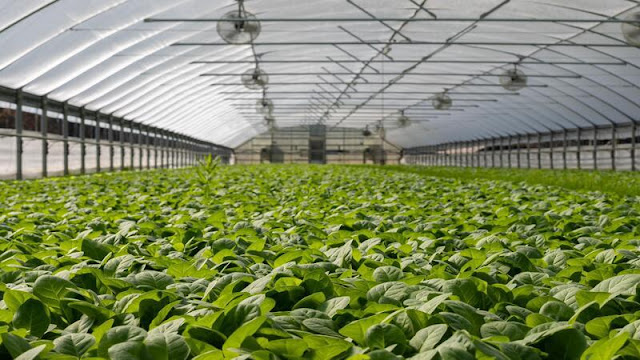
Greenhouse Produce   Introduction to Greenhouse Growing Greenhouse farming has become increasingly popular among growers seeking to maximize production levels and extend growing seasons. By utilizing the protected environment of a greenhouse structure, farmers are able to carefully control temperature, light, humidity and other climate variables to stimulate plant growth. This allows for the successful cultivation of many crops throughout the winter months and in cooler regions that may have shorter growing seasons outdoors. Some key advantages of greenhouse growing include: - Year-round production: With environmental controls, greenhouse crops can be grown all year without rest periods typically necessitated by wintry weather. This provides a continuous supply - Higher yields: Optimal growing conditions translate to larger, healthier plants and greater crop yields compared to outdoor cultivation in less-than-ideal climates. - Protection from elements: Greenhouse Produce shi...

Greenhouse Produce: Maximizing Year-Round Crop Yields

Image
Greenhouse Produce Introduction to Greenhouse Growing Greenhouse farming has become increasingly popular among growers seeking to maximize production levels and extend growing seasons. By utilizing the protected environment of a greenhouse structure, farmers are able to carefully control temperature, light, humidity and other climate variables to stimulate plant growth. This allows for the successful cultivation of many crops throughout the winter months and in cooler regions that may have shorter growing seasons outdoors. Some key advantages of greenhouse growing include: Year-round production: With environmental controls, greenhouse crops can be grown all year without rest periods typically necessitated by wintry weather. This provides a continuous supply to market. Higher yields: Optimal growing conditions translate to larger, healthier plants and greater crop yields compared to outdoor cultivation in less-than-ideal climates. Protection from elements: Greenhouses shield crops fr...

Hydroponics: The Future of Urban Farming

Image
Hydroponics   Hydroponics is a method of growing plants without soil by using mineral nutrient solutions in an aqueous solvent. With urban populations on the rise globally, hydroponics offers promising solutions for sustainable food production within cities. By growing plants hydroponically in controlled indoor environments, land, water, and other resources can be used more efficiently. This method of farming is gaining popularity as it allows year-round production and has the potential to address issues related to food security. What is Hydroponics? Hydroponics involves growing plants with their roots in a mineral nutrient solution rather than soil. The roots are placed in an inert medium like rockwool, perlite or coconut coir to provide support and structural stability. Plants absorb the nutrients they need from the solution which is carefully formulated based on their specific needs. Water serves as the solvent to transport nutrients to the plant roots. Various hydroponic sy...

The Benefits of Chelated-Iron Agricultural Micronutrient: Maximizing Crop Yield and Quality

Image
  Micronutrients are essential for plant growth and development, and iron is one of the most crucial micronutrients needed by crops. Iron deficiency in plants is a common issue in many agricultural areas, and it can lead to stunted growth, reduced yields, and poor quality crops. However, with the help of chelated-iron agricultural micronutrient, farmers can improve their crop yields and quality. Chelated-iron agricultural micronutrient is a form of iron that is chemically bonded to an organic molecule called a chelate. This chelate helps to protect the iron from being tied up in the soil and allows it to be easily absorbed by the plant roots. When the iron is chelated, it becomes more available to the plant, which leads to better growth and development. One of the main benefits of using Chelated–Iron Agricultural Micronutrient is that it can help to maximize crop yields. Iron is essential for photosynthesis, and without it, plants cannot produce enough energy to grow properly....