Posts

Showing posts with the label Clinical Diagnostic

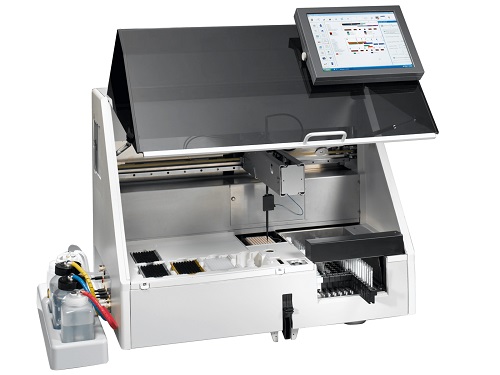
ELISA analyzer in medicine, drug discovery, and plant pathology!
Image
  The ELISA analyzer is a device that detects and measures the presence of analytes or compounds in liquid samples. It is used in many scientific fields including drug discovery, medicine, and plant pathology. An analyzer is an important tool in many labs because it allows researchers to quickly and easily test a variety of sample types and determine whether they contain proteins or other substances of interest. An ELISA is an assay that uses antibodies to detect and quantify the presence of a specific substance in a liquid sample. This is a common technique for testing cell lysates, blood samples, and food items to name a few types of liquid samples. ELISA Analyzer are one of the most widely used methods for detecting and quantifying antigens in liquid samples because they offer fast and easy results. However, ELISAs are not suitable for all samples. This is because the antibodies can be susceptible to oxidation by acids such as H2O, which can make the detection less sensitive....

ELISA Analyzer; Provide Quantitative Results For Immunological/Biochemical Parameters

Image
  An ELISA analyzer is analytical instrument that perform a basic function that is needed to process an ELISA (enzyme-linked immunosorbent assay). It is a laboratory test commonly used to detect antibodies in the blood. ELISA is an immunological assay commonly used to measure antibodies, antigens, proteins, and glycoproteins in biological samples. An ELISA Analyzer is a lab instrument used in the research and clinical fields to perform immunological assays that are specific as well as reliable. It is considered the gold standard of immunoassays. ELISA tests are typically performed on blood or urine samples, and give either positive or negative result. These tests are semi-quantitative, and a value can be determined using a calibration solution or a reagent to quantify the antibody level in a sample. The most common form of ELISA involves immobilizing an antigen (usually protein) on a solid support, such as a polystyrene microtiter plate, and adding a detection antibody that bind...

The most common strain of bacteria that causes Pneumonia Testing is Streptococcus pneumoniae.

Image
  The little air sacs known as alveoli are the main target of pneumonia, a lung infection brought on by bacteria, viruses, or fungi. Streptococcus pneumoniae is the most frequent bacterial kind that causes pneumonia. Fever, chills, cough, exhaustion, and shortness of breath are some of the signs of pneumonia. Blood tests, chest X-rays, pulse oximetry, and sputum testing can all be used to identify pneumonia in a patient. Additionally, if the patient is older than 65, extra tests are performed to look for pneumonia. For instance, a pleural fluid culture or a CT scan. Pneumonia Testing Market , a chest X-ray is frequently employed. You can determine whether your immune system is battling an infection with blood tests like a complete blood count (CBC). How much oxygen is in your blood is determined via pulse oximetry. The lungs' ability to deliver enough oxygen to your blood can be impaired by pneumonia. Inflammation in your lungs is checked for on a chest X-ray. To identify pneum...

Cell Line Development Is A Clinical Procedure In Which Diagnostic Equipment Is Used To Produce Therapeutic Biologics

Image
  Cell line development is a process that utilizes cellular machinery to produce proteins and biologics. Cell lines are derived from a variety of sources, including bacteria, plants, yeast, and mammals. For complex proteins, Chinese hamster ovary cells (CHO) are the most common. These cells are cultivated in bioreactors. This process is known as cloning. To begin cell line development, a patient's stem cells or a tissue culture can be manipulated to produce a variety of genetically defined proteins. Despite the fact that engineering cell lines remain the cornerstone of biologics development, new developments in the field are changing the way it is conducted. In some cases, new technologies, such as genome editing, are being used to increase the quality and quantity of recombinant cell lines. For many biotech companies, this approach represents a viable platform for the development of a new class of drugs. The conference will provide an opportunity to discuss the future of Cell L...

What Is Breast Cancers? What Are Various Types Of Breast Cancer Diagnostic Tool?

Image
  The breast is made up of fat and connective tissue after puberty. It contains thousands of lobules containing milk-producing glands and tiny tubes leading to the nipple. Breast cancer is the result of DNA damage or genetic mutations. It can be caused by estrogen exposure or inherited genetic defects such as BRCA1 or BRCA2. Healthy people's immune system attacks abnormal growths and DNA. The invasive lobular cancer causes the breast to swell and can spread to lymph nodes and other parts of the body. Its most often detected during a breast biopsy. Treatment for Breast Cancer Diagnostic includes a plan to eliminate the tumor and decrease the risk of it returning or spreading outside the breast. Treatment begins within a few weeks of diagnosis. The choice of treatment is based on several factors, including the location, size, lab tests, and stage of the disease. Stage 1 of breast cancer involves a small tumor that has not spread to nearby tissues. It may be a few millimeters in ...